
Sex Offender Checks in Hockley County
The official starting point is the Texas Public Sex Offender Registry search. Texas DPS maintains the public database, while local law enforcement verifies registration facts. Search by an exact or partial name when a person is known. Use an address search for community awareness near a Hockley County home, school, or other place. The result can be viewed on a map or as a list. Both views come from the same DPS records, but each makes a different fact easier to see.
Several channels complete the check. Review the registry list and its Unmapped category, use the optional DPS subscription for later changes, and consult the National Sex Offender Public Website when the search crosses state lines. For a possible error, contact the verification agency printed on the profile. Suspected noncompliance belongs with that agency, the Hockley County Sheriff, or the municipal police department that serves the address. A name search remains a lead, not fingerprint proof of identity.
Hockley County Unmapped Registry Records
A map pin is useful, but it is not a completeness test. DPS maintains an Unmapped group because an entered address or geographic description does not always produce a plot. Rural routes, new roads, format differences, and other address conditions can affect mapping. The portal does not justify guessing why any one Hockley County registry record lacks a pin.
Run the map query, then inspect the list and Unmapped results for the same area or name. A blank map spot means only that no pin appeared there.
The Texas DPS registry interface shows how the public map and list tools sit together.
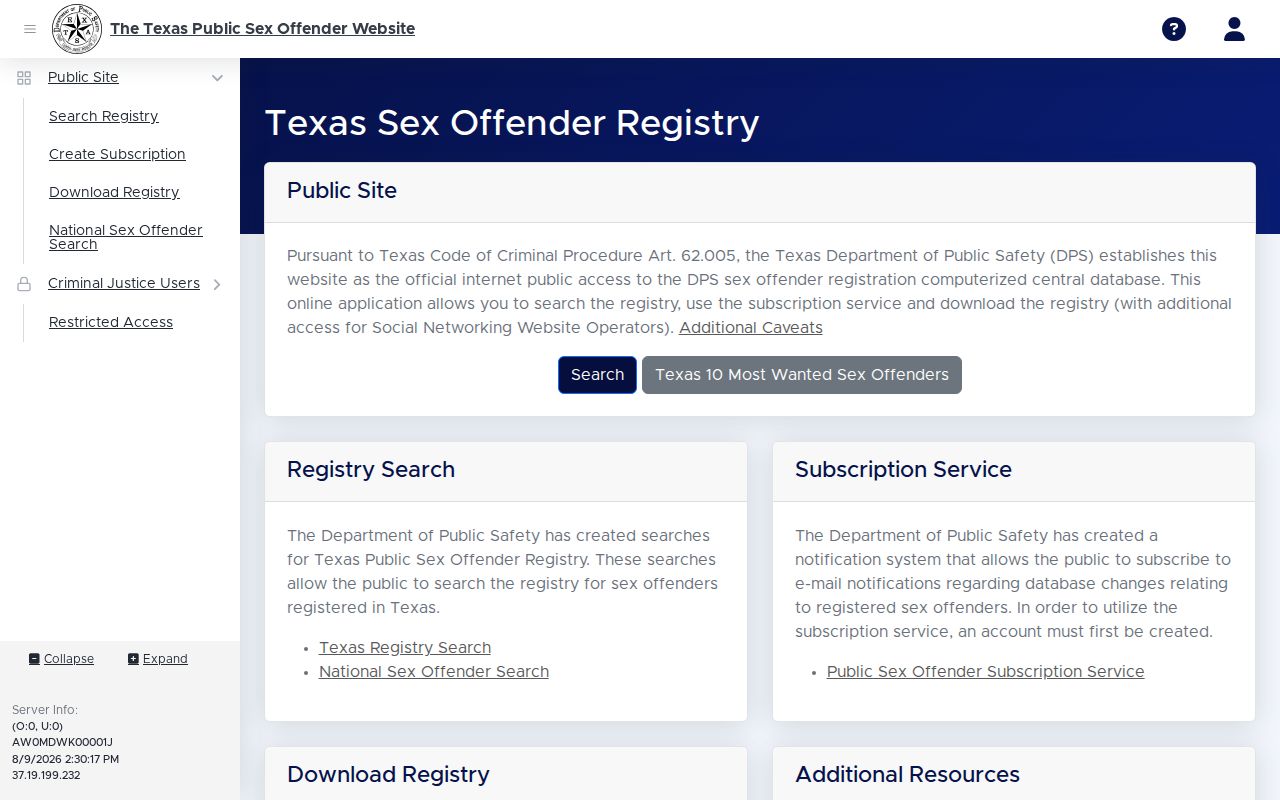
The interface view is a reminder to use both formats before treating a Hockley County search as complete.
How to Search the Texas Public Sex Offender Registry
DPS offers three distinct search paths. Map Address accepts an address and expandable additional options. Registrant Name uses last name, first name, and birth date. Institute pairs an institution choice with a dependent campus field. Do not assume a radius value that the live screen does not show. Search sessions expire after 30 minutes, so note the verification agency and key profile details before the session closes.
- Open the DPS search and review its conditions and warning. Choose Map Address, Registrant Name, or Institute based on the fact you know.
- Enter the available fields. Use the Additional Search Options only as the live form presents them, then submit Search.
- Compare the result list with the map and inspect the Unmapped category. Do not rely on pins alone.
- Open the relevant profile, compare more than a name, and note the listed verification agency for any follow-up.
| Field Label | Type | Required | Format or Use |
|---|---|---|---|
| Address | Text | Search dependent | Starts Map Address; more options can expand |
| Last Name | Text | Name search | Registrant Name mode |
| First Name | Text | No | Narrows a last-name result |
| Birth Date | Date | No | Helps distinguish similar names |
| Institute | Select | Institute mode | Controls the Campus choices |
| Campus | Select | Institute dependent | Available after an institute is chosen |
The DPS registry search form is the source for these controls.
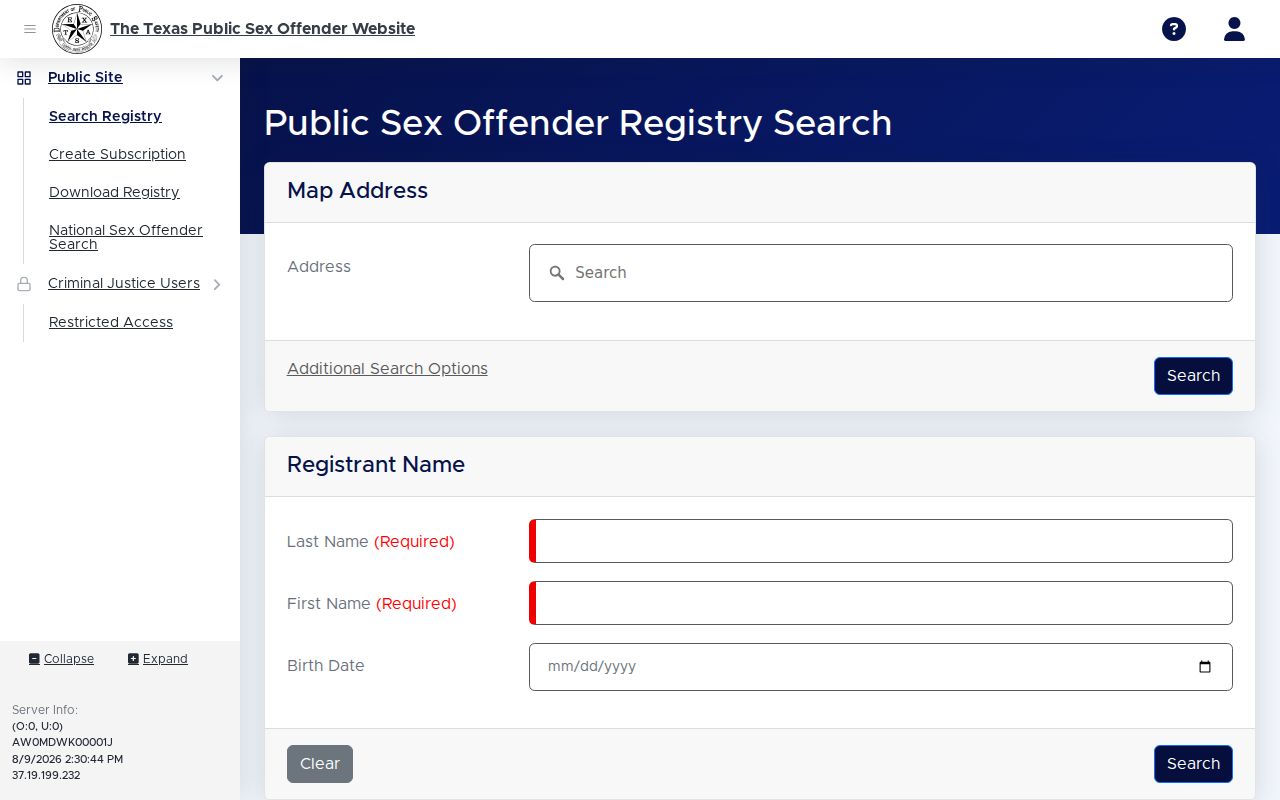
The captured search screen shows the official routes without displaying or identifying a private registrant.
Hockley County Offender Verification Agencies
Residence determines the local registration office. A registrant who lives within Levelland, Sundown, Anton, or another municipality reports through that city police chief's office. A person outside a municipality reports through the Hockley County Sheriff. The profile's verification-agency field is therefore more than a label. It identifies the practical office for a data correction or compliance concern.
Chapter 62 also sets recurring duties. A civilly committed sexually violent predator generally verifies every 30 days. A person with two or more sexually violent offenses generally verifies every 90 days. Others generally verify yearly. Moves require notice to the old authority and prompt registration with the new one. Repeated stays of more than 48 consecutive hours elsewhere may create another duty.
For a rural Hockley County address, call the Hockley County Sheriff at 806-894-3126. For an address inside a city, contact that municipal police agency. Report a profile error to the agency named on the record and suspected noncompliance to local law enforcement.
Inside a Registry Profile
A public profile joins identity clues, registration facts, and offense information. Compare several fields before deciding that a result concerns the person sought. DPS warns that alphanumeric searches do not establish identity. Only fingerprints can do that. Some Chapter 62 records also remain outside the public interface due to statute or a court order, so a no-result screen is not an all-purpose finding.
| Name and Aliases | Registered name plus reported alternate names |
|---|---|
| Photo and Description | Recent color photo, age or birth date, sex, race, build, eyes, hair, and identifying marks |
| Residence | Address or a geographic description, with a map status when available |
| Offense Record | Qualifying offense, adjudication date, victim-age category, and punishment |
| Registry Duties | Status, risk level, verification agency, and duration or end indicator |
| Other Public Facts | Higher-education institution, qualifying vehicles, supervision or custody category, and scars, marks, or tattoos |
Social Security numbers, driver's-license numbers, phone numbers, online identifiers, employer contacts, victim identities, and law-enforcement-only fields are not public profile fields. Certain juvenile information can also be withheld by order.
Hockley County Offender Name Matches
A shared name is not enough. Compare aliases, photograph, birth information, physical traits, address, and verification agency. Even a close match should be treated with care because registry entries can change and search input can be incomplete. Texas DPS expressly distinguishes its alphanumeric public search from a fingerprint-confirmed identification.
If a profile appears wrong, note the details and contact its verification agency. Do not repost or confront anyone. Report a suspected failure to register or report a move to local law enforcement.
Note: A missing public result can reflect search limits or a nonpublic record, so it is not a universal statement about a person.
Texas Registration Levels and Requirements
Texas risk levels 1, 2, and 3 do not set duration by themselves. The offense and circumstances control under Code of Criminal Procedure Chapter 62. Adult duties last for life or until ten years after the latest applicable discharge or release. Juvenile duration is generally ten years from disposition or completion, whichever is later, subject to exemption and nonpublic orders.
| Texas Level | Risk Meaning | Duration and Public Visibility |
|---|---|---|
| Level 1, low | Low danger; not likely to continue criminal sexual conduct | Offense sets ten-year or lifetime duty; public status depends on Chapter 62 and orders |
| Level 2, moderate | Moderate danger; may continue | Offense sets ten-year or lifetime duty; level alone does not decide the term |
| Level 3, high | Serious danger; likely to continue | Offense sets the term; some high-risk cases also trigger added notice |
Texas risk level is not the federal SORNA tier. High-risk and civil-commitment cases can prompt bilingual postcard notice, and specified schools may receive notice. The Texas DPS registration program overview provides the official rules context.
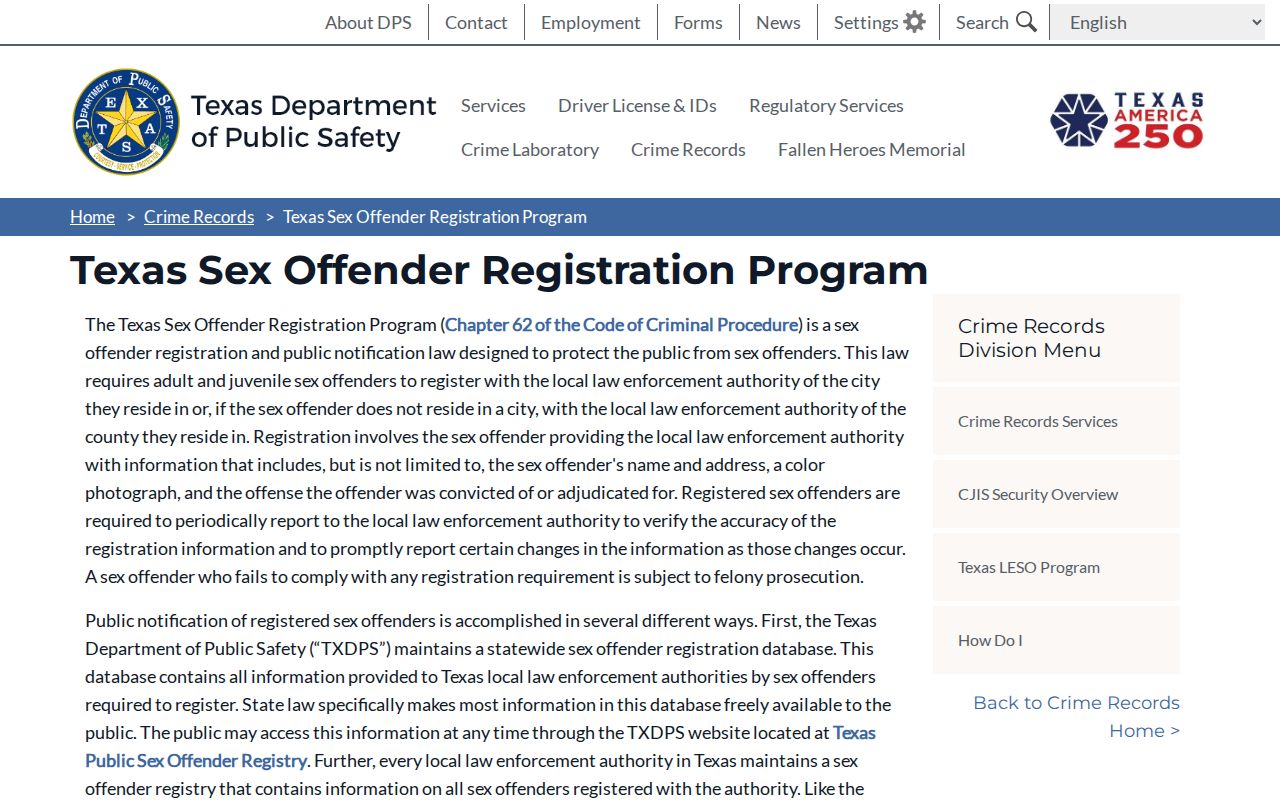
The program page connects the public Hockley County registry view to the state duties that produce its data.
Hockley County Registry Subscription Alerts
The DPS subscription is separate from a one-time public search. It requires an account and sends email when registry information relevant to saved criteria changes. DPS did not expose every trigger or filter outside account context, so the safe expectation is a notice about a relevant database change, not a promise of a certain radius, move, or event.
Use a subscription for ongoing awareness after completing the first map, list, and Unmapped review. Keep the email current and return to the official profile when a message arrives. The alert itself should not replace review of the current record or contact with its verification agency. It is a change signal, not an identity finding.
Community Notification and Lawful Use
Registry data supports public awareness and safety planning. It can explain a listed address or public notice, but it never authorizes confrontation, threats, or punishment.
Misuse can bring legal consequences. Texas DPS warns that using registry information to injure, harass, or for another unlawful purpose may lead to criminal prosecution or civil liability under Code of Criminal Procedure Chapter 62. Never use a Hockley County registry result for vigilantism or discrimination.
When facts seem wrong, use the named verification agency. When conduct suggests noncompliance, contact the Hockley County Sheriff or the police department with jurisdiction. Those channels let trained officials assess the concern without putting a household or neighbor at risk.
Hockley County Offenders and NSOPW
The National Sex Offender Public Website is the official supplement when a search reaches beyond Texas. It can bring participating jurisdictions into one query, which helps when an address history or community concern crosses a state line. It should not replace the Texas registry for a Hockley County record.
Start with DPS for Texas-specific profile fields, map and Unmapped views, state terminology, and the local verification agency. Then use NSOPW for the wider check. If the two services appear to differ, return to the live Texas profile and ask the listed agency to explain or correct its own data. Neither tool should be used to publish a private identity or provoke direct contact.